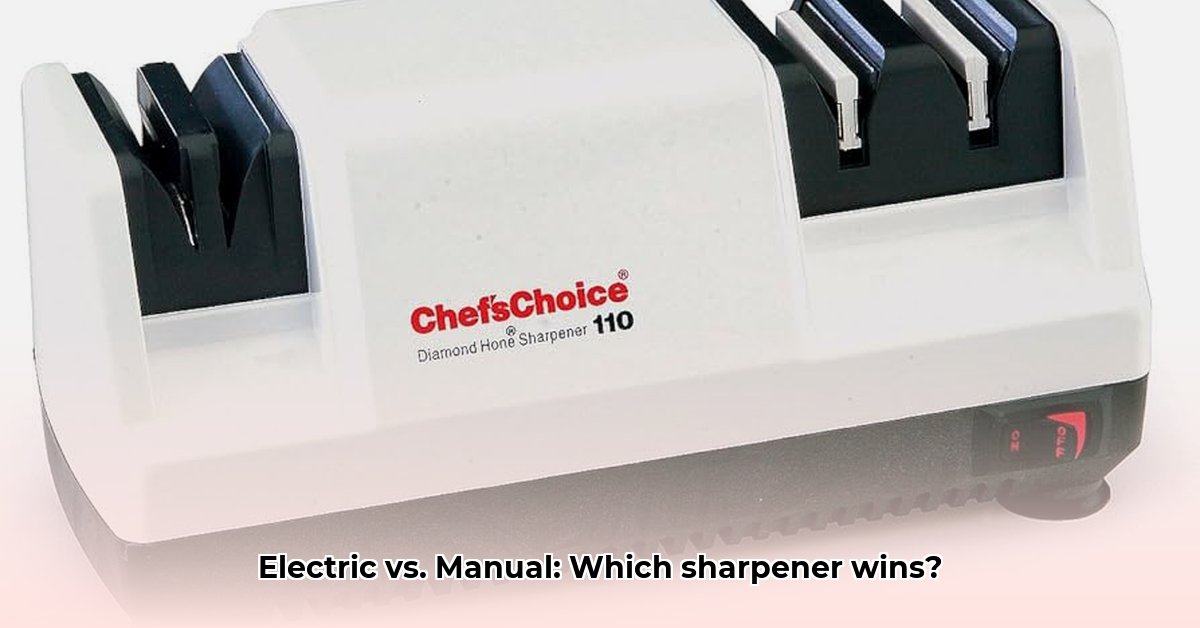
Choosing the right knife sharpener can significantly impact your cooking experience. This in-depth comparison reviews Chef'sChoice's popular electric (Model 110) and manual (Model 478) diamond hones, helping you decide which best suits your needs and budget. We'll delve into features, performance, and ease of use, ultimately guiding you to an informed purchasing decision.
Model 110: The Electric Sharpener
The Chef'sChoice 110 is an electric sharpener featuring a three-stage sharpening process utilizing 100% diamond abrasives. This multi-stage approach ensures a consistently sharp edge. The Trizor™ Plus technology maintains a precise sharpening angle, crucial for optimal results. Magnetic guides securely hold knives during the process, enhancing ease of use and safety.
Performance Analysis
The 110 excels at sharpening a wide variety of knives, from paring knives to large chef's knives. Its electric motor efficiently delivers a professionally sharp edge. However, it's important to note that fully serrated knives are not ideal for this model; they may require alternative sharpening methods.
Pros and Cons
Pros: Consistent sharpening, ease of use, efficient for multiple knives, superior edge quality. Cons: Higher price point, larger footprint, unsuitable for fully serrated knives.
Model 478: The Manual Sharpener
The Chef'sChoice 478 is a manual sharpener, offering a more hands-on and budget-friendly alternative. Its two-stage diamond honing system provides a very sharp edge, but requires more user skill and precision. Its compact design makes it ideal for smaller kitchens and easy storage.
Performance Analysis
The 478 demands more user control and practice to achieve optimal results. The angle of the knife must be carefully controlled throughout the sharpening process. While it delivers excellent sharpness, it might not reach the same level of precision as the electric Model 110, particularly for less experienced users. Similar to the 110, fully serrated knives are best sharpened with alternative tools.
Pros and Cons
Pros: Affordable, compact, space-saving, simple maintenance, effective for basic sharpening needs. Cons: Requires more user skill and practice, less consistent sharpness than the 110, may not be suitable for all knife types.
Head-to-Head Comparison
| Feature | Chef'sChoice 110 (Electric) | Chef'sChoice 478 (Manual) |
|---|---|---|
| Type | Electric | Manual |
| Sharpening Stages | Three | Two |
| Power Source | Electric | Manual |
| Size | Larger | Compact |
| Price | Higher | Lower |
| Ease of Use | Easier | Requires more skill |
| Sharpness | Superior | Very good |
Buyer's Guide: Which Sharpener is Right for You?
Chef'sChoice 110 (Electric): Ideal for professional chefs, serious home cooks with numerous knives, and those prioritizing speed and consistent, ultra-sharp results. The ease of use makes it a great choice for busy cooks.
Chef'sChoice 478 (Manual): Perfect for budget-conscious home cooks, those with a smaller knife collection, or those interested in learning the manual sharpening technique. Its compact size is a big plus for kitchens with limited counter space.
Addressing Common Concerns
Will it damage my knives? Proper technique is key. Avoid excessive pressure and follow the manufacturer's instructions. Both sharpeners are designed to hone, not grind, the blade.
How do I maintain them? Regular cleaning is vital. A quick wipe-down after each use helps maintain hygiene and optimal performance.
Conclusion
Both the Chef'sChoice 110 and 478 offer excellent sharpening capabilities. The choice depends on your individual needs and preferences. The 110 excels in speed, consistency, and ease of use, while the 478 provides a budget-friendly and space-saving solution for those willing to invest time in mastering the manual sharpening technique. Let us know your experiences in the comments below!
⭐⭐⭐⭐☆ (4.8)
Download via Link 1
Download via Link 2
Last updated: Monday, May 12, 2025